
-
Where Is The South African “Sideways”?
28 Nov 2011 by Jasmine Stone in 2oceansvibe Columnists, Featured, Wine

As the nation watched Parliament give the Protection of Information Bill a thumbs up, I was again reminded how stupid people can be. I don’t follow fools on twitter, but you do happen to see some of the absurd rantings and ravings of the narrow-minded, bigoted, morons that seem to make up such a large part of the human race. “Run for the hills,” they cried – the hills being a euphemism for some place outside of Africa, “it’s all over now.” I heard the word “banana” so many times yesterday it was as if monkeys had learnt to speak. In a real life conversation I was told that it was “depressing that the Government Secrecy Act had been passed” and that it seems like “we are going the way of Zimbabwe into a dictatorship.”
I am not sure what is worse, these numb-skulls, or the bill itself. Either way, I sat at home yesterday evening not in the best of spirits, feeling decidedly misanthropic. When the slings and arrows fall down heavily upon me, I find solace, as you might have guessed, in books and wine. So I poured myself a glass on inexpensive Chenin Blanc (the pleas for bail out have failed, and the bank manager is now smashing plates), and opened up a a book from an author I usually turn to when fortune makes itself this outrageous – Tom Robbins. This time it was Another Roadside Attraction and almost immediately, two paragraphs cheered me up:
“There are three things that I like,” Amanda exclaimed upon awakening from her first long trance. “These are: the butterfly, the cactus and the Infinite Goof.”
Later, she amended the list to include mushrooms and motorcycles.
While strolling through her cactus gardens one warmish June morning, Amanda came upon an old Navajo man painting pictures in the sand.
“What is the function of the artist?” Amanda demanded of the talented trespasser.
“The function of the artist,” the Navajo answered, “is to provide what life does not.”
The delightful yet paradoxical last sentence made me laugh and look at my glass, my book, and nod. They were giving me something that the life, yesterday, had lacked completely. Robbins’ whimsy, and the Chenin’s roughshod pear and citrus flavors, calmed me, let me look upon man with a softer gaze, and realize that as terrible as the faults of governments are, my mind and my palate were still my own.
I thought to myself – somewhat dictatorially I guess – wouldn’t everybody be happier if they had this?
I again wondered at how wine lifts the spirits, calms the mind, while letting it still explore and wander. Frustration mellowed into contemplation. But what I unfortunately ended up contemplating was where I ended up in last week’s column. How to interest people in wine?
It is too easy to moan that not enough people drink wine; the question is how do we get them drinking? The wine marketers ask, “Where will these people come from?” The answer is always, emerging markets. Globally for wine this is almost always China, with wine producers falling over themselves to get a piece of the Eastern vinous pie. The wine schools in Bordeaux have been saved by Chinese students, and the Bordeaux and Burgundy wine markets have been bolstered healthily by Chinese buyers.
In South Africa the “emerging market” is a euphemism for black people. I wish it wasn’t, but this is how the industry views things. In South Africa, wine sellers speak in hushed tones of trying to crack this “black market”; as if there’s some sort of special wine these homogeneous black people will taste and shout, “Aha! This is for us, come brothers let us drink!” This, of course, is codswallopof the highest order.
Language is the primary issue here, not the wine itself. This happens on two levels, the language of wine can be stuffy and alienating (to everybody), and the language of wine in South Africa is spoken almost entirely in English and Afrikaans. The notion of making crappy sweet wines that will entice a certain class of people, who will then mysteriously trade-up at a later stage in their drinking lives is an outmoded, old-fashioned notion that is doing the industry no good. We need to start talking to the “market”, not at them and for them.
One example of a man who has changed the wine world quite dramatically – in the USA at least – is Gary Vaynerchuck. Some people love him, some people don’t. But without question, he got more people drinking wine. This was done primarily through his almost daily wine videos which he used to promote his New York based wine store. He shot 1 000 of these videos. Take a look at one:
He knows his stuff and never speaks down to his viewers. I must have watched 50-100 of his shows over the last couple years. And the one thing I never experienced was him lording himself over anyone with his superior knowledge. And more importantly, he never dumbed down his content. He made wine accessible without snobbery, without douchbaggery, and without talking about wine as if his viewers were complete morons.
Of course the North American and South African wine drinking markets are very different. With North American shores being a destination for foreign wines, it’s a place for those wines to prove themselves, excel, and get scored. It is a destination because the wines can be bought in big numbers. No wine made outside South Africa gives two shits what a South African commentator has to say about it. It makes no difference. They don’t sell here.
So how do we start creating a vibrant wine market in SA? It’s not about importing wine, the price is still prohibitive. It’s not going to be the handful of people who write about wine – you could invite them for lunch and they would fit around a largish dinning room table, although you would have to order three times the quantity of wine – they have little sway in South Africa, and whatever power they wield, it is waning. How can wine find its way into the common consciousness?
What is needed is for wine to start appearing in South African popular culture. (Do we have one of those?) Remember that rather kak film, Sideways? That changed how Merlot and Pinot Noir were sold in the States. Just because that snivelly little prick Miles told everyone to “Fuck Merlot”, they did, running to quaff cheap Californian Pinot Noir by the bucket load.
Maybe Isidingo needs a Sommelier, Egoli a wine-maker; what if Nederburg sponsored the cricket? Better than cooking-oil, surely? There needs to be a nation-wide marketing endeavor. Walk-around tastings are for the already initiated, tutored tastings generally for wine-nerds, and the big wine shows are piss-ups (at least on decent drink, I guess). I want to hear wine being spoken about by our radio DJ’s, TV presenters, sportspeople and actors. Although we rely heavily on imported television and movies, you can’t expect them to talk about our wines.
And that’s the difference. Wine is about place. No matter how kak and mass-made a wine is, it still comes from vineyards somewhere. Sideways was Californian, it was never going to inspire South African wine drinkers. Maybe we need a Sideways II: Miles does Malmsbury, or Sideways II: Fuck Pinotage. Whatever, but we need to start celebrating our wines on a national scale.
Is there space, perhaps, for a generic marketing body that focuses on South Africa, and promotes South African wine to South Africans? Probably, but I don’t think we’ll be seeing one soon. Somehow we need to start seeing our wine on screens and hear about it from our “celebrities”. Until trendsetters – oh, god this is hard to type, I’m sorry dear reader – begin to see wine as “cool” and the knowledge of such as aspirational, wine drinking in South Africa is going to plod along as it always has done – with an ambivalent public and a stagnating industry.
Latest News
-

Tuesday Morning Spice
[imagesource:flickr] ...
-
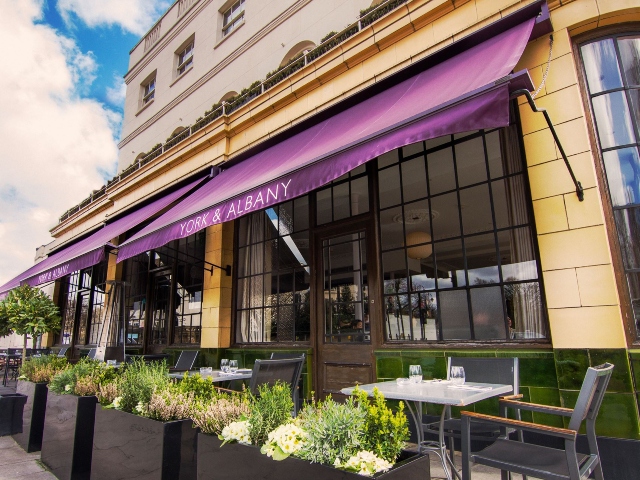
Squatters Who Took Over Gordon Ramsey’s Pub Want To Turn It Into A ‘Café For Victim’s Of Gentrification’
[imagesource:albany&york/facebook] Squatters who took over a Gordon Ramsay pub in L...
-
You Need To Stream These Three Eye-Opening Documentaries Right Now [Trailers]
[imagesource:hbo] In this era of television streaming, there are new documentary films ...
-

Meet The Lucky Saffas Who Become Instant Multi Millionaires Thanks To The Recent R131 Million Powerball Draw
[imagesource:gencraftai] Five lucky AF South Africans just became instant MULTI million...
-
A Line Too Far? Saudi Arabia’s ‘The Line’ Cut Short Due To Finances
[imagesource:neom/facebook] Robert Browning may have waxed lyrical about how a man's re...
-
-
-
2oceansvibe Partners
-


-